Writing

Why I Write
…In eternity, give me a room full of paper and pens, and incense and chai tea, and flowers, and love, so I can continue to write from the great beyond and inspire others who will take this alchemical work seriously.
Excerpted from Why I/We Write
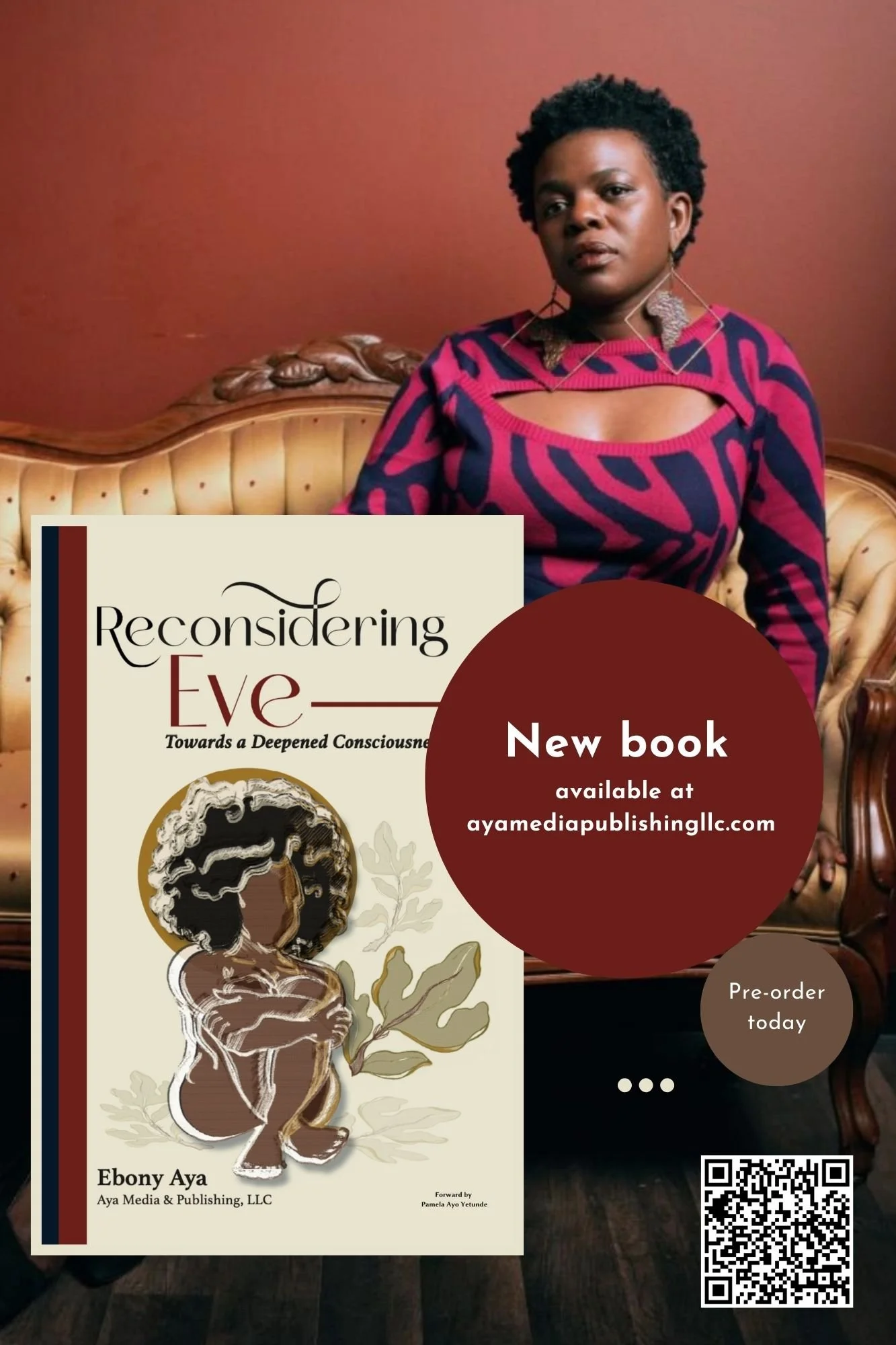
Reconsidering Eve: Towards a Deepened Consciousness
Imagine what can happen when the sacred texts that we have turned to for spiritual nourishment and direction are places of refuge. Imagine the possibilities of staring into these texts we have meditated on from our youth up, to see ourselves reflected within the narratives in such a way that leaves us feeling simultaneously inspired and challenged, without guilt or shame. Reconsidering Eve: Towards a Deepened Consciousness is a text that allows us to imagine, giving us space to think through what we have learned about the biblical concept of Eve and the situatedness of Black womanhood. The stories found within these pages ensure a pathway towards a deepened self-consciousness that ultimately leads to liberation.
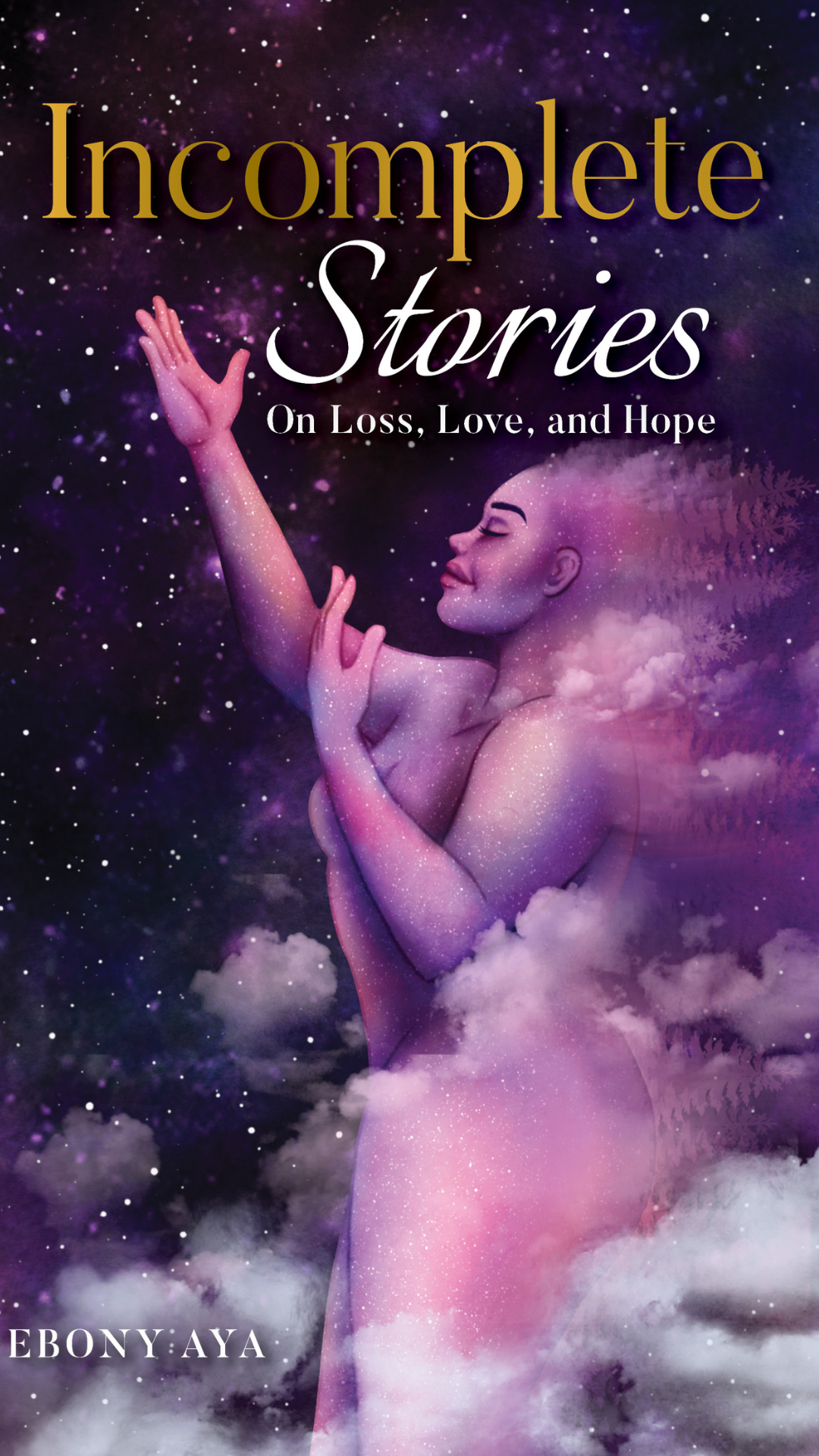
Incomplete Stories: On Loss, Love, and Hope
Sickness, disease, and death have a way of unsettling our lives and emotions. When Ebony Aya's grandmother was diagnosed with Alzheimer’s disease and placed into a long-term care facility, it prompted her to turn inward on a journey of critical self-reflection and examination. This book, Incomplete Stories: On Loss, Love, and Hope, is the culmination of that process. Consisting of three distinct parts, the book opens with Aya’s letters to her grandmother, moves on to feature journal reflections from her time in Ghana during the “Year of Return,” and closes with a treatise underscoring the importance of Sankofa, going back to get what we are close to forgetting.
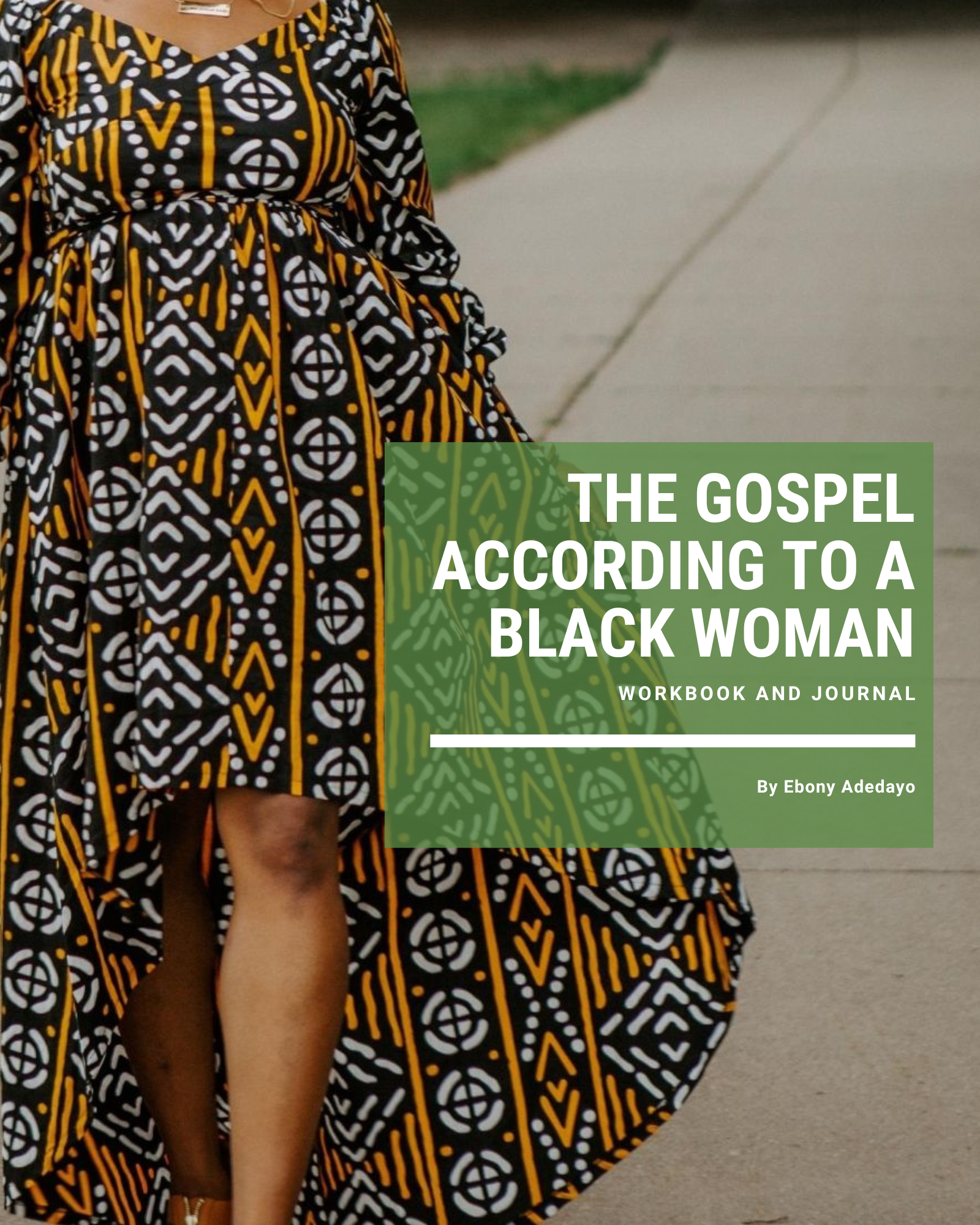
The Gospel According to a Black Woman
What happens if we took the word ‘gospel,’ a word that has been traditionally used in a Christian context, and opened it up to broader usage? What happens if we, as Black women, insisted that truth is not only found in sacred texts like the Bible, but is also found in us, within the depths of our experience? What happens if we collectively insisted that our lives, our bodies, are also sacred texts that need to be studied and taken seriously? These are the questions that Aya explores in her book, the Gospel According to a Black Woman. Taking a critical look at history, culture, and the sacred, Aya concludes that when the truth of Black women is upheld and validated, Black women get free.
Articles and Upcoming Books
Articles:
Aya, E. (2025). Spirituality and ecology: (Re)membering Black women's legacies. Open Rivers: Rethinking Water, Place, and Community, 28, p. 24 - 33. https://openrivers.lib.umn.edu/article/spirituality-and-ecology/.
Aya, E. (2024, March 15). The hostility that Black women face in higher education carries dire consequences. The Conversation. https://theconversation.com/the-hostility-black-women-face-in-higher-education-carries-dire-consequences-224319
Aya, E.J. (2023). Examining Blackness. Women, Gender, and Families of Color (Online edition). Accessed from https://womengenderandfamilies.ku.edu/honoring-bell-hookss-legacy-humanist-feminist-public-intellectual-social-critic-and-educator/
Aya, E.J. (2022). Spirit murder: Black women's realities in the Academy. In Porter, C.J.; Sule, V.T.; Croom, N.N. (eds). Black feminist epistemology, research, and praxis: Narratives in and through the academy, pp. 85 - 91. Routledge.
Upcoming Books:
At the Gates: Black Women, Knowledge, and Liberation in Higher Education (Ebony Aya and Stephanie Morgan, co-editors, fall 2026)
Of Body and Spirit: Writing as a Sacred Practice (Ebony Aya, fall 2026)